The town has a genuinely historic core with a conservation area around the castle and old town, Victorian and Edwardian property along the seafront and older streets, and extensive post-war estate housing behind. The defining factor for our work is the exposure: this is a seafront town and salt-laden air is hard on external surfaces.
Properties on this side take a genuinely harsher salt-laden exposure, and sills weather noticeably faster as a result. Preparation matters more here than almost anywhere else in our patch, because salt contamination left on the surface undermines whatever goes over it.
Terraced and older townhouse stock here often has narrow sills sitting hard against the pavement or a small front garden, catching splash-back as well as direct rain. Access is straightforward at ground floor but masking matters more when the sill is a foot from a public footpath.
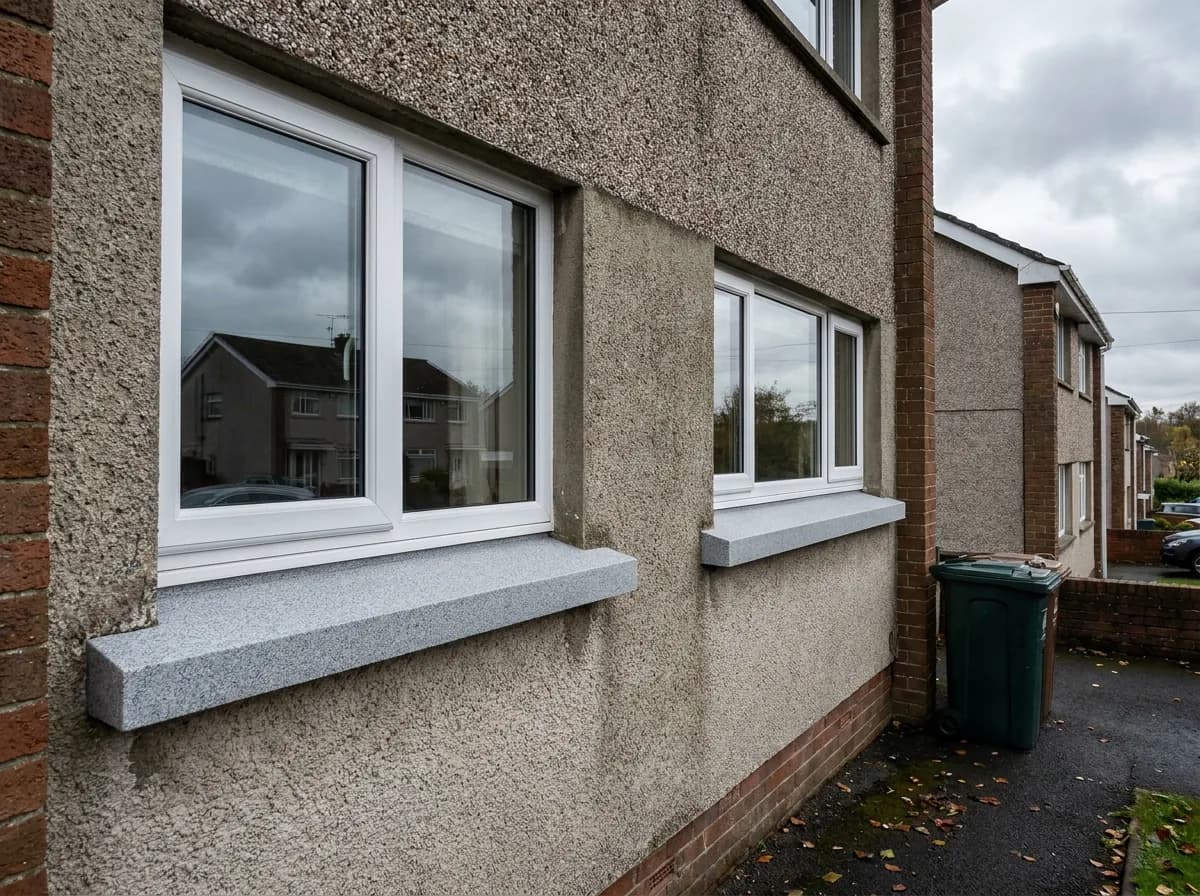
The post-war and 1960s to 1980s housing here was built with standard cast concrete sills, and they are now at exactly the age where the surface starts crumbling and paint stops holding. They are the most common sills we coat, and because the openings are a consistent size across a street the work is efficient.
Where properties sit in a conservation area or have any listed status, changing the external appearance can need consent. We will flag it if we think that applies to you and we would expect you to check with the council before we start, rather than find out afterwards.
Salt contamination is the practical issue here. Sills and rendered walls on seaward elevations weather visibly faster, and thorough washing down to remove salt before anything is applied genuinely affects how long the finish lasts. It is the one part of our patch where we would push hardest on preparation.