
LM Contracts Services Ltd logo

Resin Flooring in Glenavy

County Antrim our home village

Epoxy and polyurethane resin floor systems for garages, utility rooms, workshops, showrooms and commercial units. Seamless, easy to clean, and specified around the condition of your existing slab. We cover Glenavy as part of our normal working area, with no travel charge added.

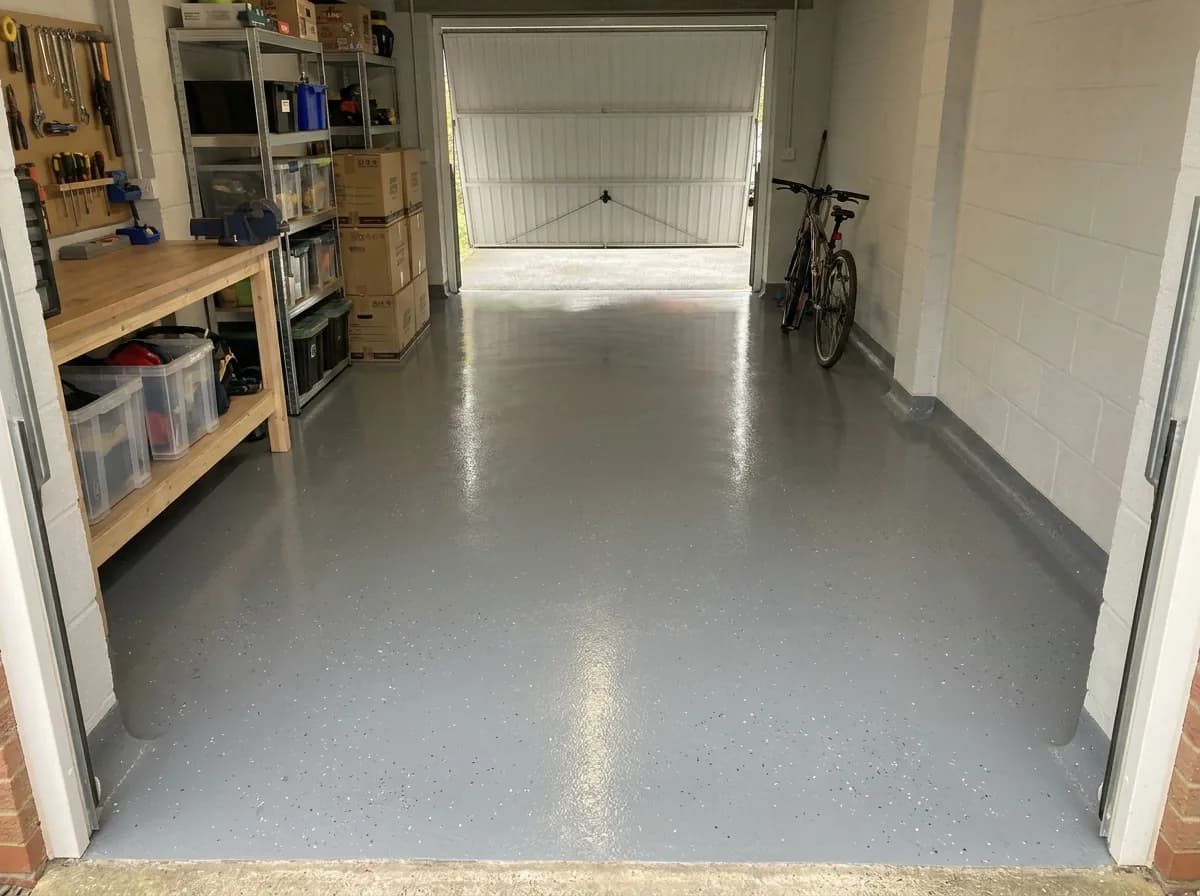
Completed grey epoxy resin floor with decorative flake in a domestic garage, seamless from wall to wall with a coved edge
Based in Glenavy, County Antrim
Residential and commercial work
Free, no-obligation quotations
Careful preparation on every job

Local context

Resin Flooring for Glenavy property

Glenavy's building stock runs from older stone and rendered village property along the main street through to post-war housing and a good deal of detached rural bungalows and farmhouses on the roads out toward Ballinderry and the lough. It is a genuine mix rather than one dominant era, so almost every kind of sill, slab and external surface we work on is represented within a couple of miles of the yard.

Older rural properties here commonly have outbuildings and stores with original slabs poured long before modern damp proof membrane practice. They convert well, but moisture testing is the first thing rather than an afterthought.

Bungalows here frequently have a detached garage or a workshop building, often used for genuine workshop purposes rather than just parking, which usually points toward a harder-wearing build and specified slip resistance.

The estate housing here typically comes with a standard attached or detached single garage, and those slabs are the most common resin floor we are asked about. They are usually straightforward, with dusting concrete and old paint being the normal starting point.

Farm buildings, stores and machinery sheds here take heavy point loads, mud and washdown, which usually points toward a more robust polyurethane specification with deliberate slip resistance rather than a domestic garage build-up.

Being based in the village means no travel time is priced into a Glenavy job, and it is straightforward for us to call back if you want something looked at again.

Epoxy or polyurethane, and does it matter?

Both are resin systems and both give you a seamless floor, but they behave differently and the right choice depends on how the floor gets used.

Epoxy is hard, builds thickness well, bonds strongly and gives a high-build, hard-wearing surface. It is the usual choice for garages, workshops, storage and general commercial floors. Its weaknesses are that it is more brittle under sharp impact and it can chalk or yellow under prolonged direct UV, so it is not ideal for a floor in full sunlight all day.

Polyurethane is more flexible and more tolerant of temperature movement and thermal shock, and it holds its colour better under UV. It is the usual choice where a floor gets steam cleaned or washed down, where there are significant temperature swings, or where a little more give underfoot is wanted.

In a lot of domestic jobs, a garage in particular, epoxy is the sensible answer. We will tell you which we are proposing and why rather than just naming a product.

Moisture in the slab, the single biggest cause of failure

This is the thing to understand before you spend money on a resin floor. A concrete slab is not dry just because it looks dry. Ground moisture rises through concrete continuously, and if a slab has no working damp proof membrane underneath it, that moisture arrives at the surface. Put a sealed resin coating on top and the moisture has nowhere to go, so it builds pressure under the film and lifts it off in blisters and sheets. It usually looks fine for weeks or months first, which is what makes it so expensive to get wrong.

Older garages, outbuildings and slabs poured before modern DPM practice are the usual suspects, and it is common in exactly the sort of buildings people want to convert. It is not a reason to give up on a resin floor. It is a reason to test rather than assume, and to specify a moisture-tolerant primer or a damp-suppressant system where the readings call for it.

If a contractor quotes you for a resin floor in an old garage without ever mentioning moisture, that is worth asking about before you accept the price.

Cracks, joints and what happens to them

Resin does not bridge a moving crack. If there is live movement in the slab, whether from settlement, a joint, or a crack that opens and closes with temperature, that movement will reflect through a resin floor and show as a line, generally within the first year.

Static cracks, which is most of them, are a straightforward preparation item: opened out, cleaned, filled with a suitable resin repair mortar and made flush before the system goes down. Movement joints are different and need to be carried through the finished floor rather than covered over, so the joint stays a joint.

The assessment matters more than the repair here. Deciding whether a crack is dead or live is a judgement call made on site, and it changes the specification.

Being straight with you

What it suits, and what it does not

What this suits

  • Garages, including converted and partially converted garages
  • Utility rooms, boot rooms and pantries
  • Workshops and home workshops
  • Converted outbuildings and stores
  • Commercial units, storage areas and back-of-house floors
  • Showroom and retail floors where a seamless finish is wanted

What it does not suit

  • Slabs with severe active structural movement, which need addressing before any floor finish
  • Floors that need to stay breathable and vapour-open unless a suitable system is specified for it
  • Timber suspended floors without an appropriate build-up
  • External areas exposed to full weather, where a different specification applies

Our process

How the work runs in Glenavy

  1. 01

    Site assessment

    We look at the existing floor, check the substrate, look for movement and cracking, and consider moisture. This is what the specification is built on, so it is not a two minute look.

  2. 02

    Specification and quotation

    We set out which system we are proposing, what preparation is included, and what the finish and slip resistance will be, so you can compare like with like against other quotes.

  3. 03

    Clear and strip

    Floor cleared, and any failed coating, tile, vinyl or adhesive residue removed.

  4. 04

    Mechanical preparation

    Diamond grinding or blasting to open the surface and remove contamination, then thorough vacuuming.

  5. 05

    Repair and prime

    Cracks and defects filled with resin repair mortar, movement joints treated properly, then primed with the appropriate primer for the moisture conditions found.

  6. 06

    Apply the system

    Resin applied in coats to the specified build, with aggregate broadcast in where slip resistance is part of the specification.

  7. 07

    Cure and handover

    Protected while curing, with clear dates for foot traffic and for vehicles, plus straightforward cleaning guidance.

Cost

What drives the price

  • Floor area, with larger areas costing less per square metre
  • Condition of the existing slab and how much preparation it needs
  • Whether an existing floor covering has to be removed
  • Moisture conditions and whether a damp-suppressant system is required
  • System type and build thickness
  • Slip resistance and any decorative flake or colour requirements
  • Access, working hours and whether the area has to be worked in sections

As a general UK market guide, domestic epoxy garage floors commonly fall somewhere around sixty to one hundred and thirty pounds per square metre for the coating, with full jobs including preparation more typically in the seventy to two hundred pound per square metre range depending on the state of the slab. Those are published market ranges to help you sense-check quotations, not an LM Contracts price. Our quotation comes after a site assessment, because on this kind of work the condition of the existing floor moves the price far more than the area does.

Questions

Resin Flooring in Glenavy, answered

Do you carry out resin flooring in Glenavy?

Yes. Glenavy is where we are based, comfortably inside the area we cover, and we work there regularly.

How much do you charge to travel to Glenavy?

Nothing extra. Glenavy sits within our normal working radius, so travel is not added to the quotation.

What kind of properties do you usually work on in Glenavy?

Glenavy's building stock runs from older stone and rendered village property along the main street through to post-war housing and a good deal of detached rural bungalows and farmhouses on the roads out toward Ballinderry and the lough. It is a genuine mix rather than one dominant era, so almost every kind of sill, slab and external surface we work on is represented within a couple of miles of the yard.

How much does a resin floor cost?

As a market guide, domestic epoxy garage floors commonly sit around sixty to one hundred and thirty pounds per square metre for the coating, and seventy to two hundred for a full job including preparation. Those are general UK figures to help you judge quotes. We price after seeing the floor, because slab condition changes the number more than the area does.

How long before I can park on it?

Foot traffic is usually possible within hours or overnight. Vehicles need the full chemical cure, which is typically around three to seven days depending on the system and the temperature. We give you actual dates. Driving on it early, especially turning the wheels while stationary, is the most common way a good floor gets marked.

My garage floor gets damp. Can I still have a resin floor?

Often yes, but it has to be dealt with rather than ignored. Moisture rising through a slab with no working damp proof membrane is the single most common cause of resin floor failure, because the coating seals it in and it lifts the floor off in blisters. The answer is to check the slab and, where needed, specify a moisture-tolerant primer or damp-suppressant system.

Will it cover cracks in my concrete?

Static cracks, yes. They get opened out, cleaned, filled with resin repair mortar and made flush during preparation. Live cracks with active movement are different: resin will not bridge movement, so that crack will come through the finished floor. Movement joints have to be carried through the floor rather than coated over.

Is resin flooring slippery?

A smooth gloss finish is slippery when wet, which is exactly why slip resistance is specified rather than assumed. Broadcasting a fine quartz aggregate into the coating gives controlled grip. More texture means better grip and slightly more effort to clean. For anywhere that gets wet, we would recommend it.

Do I need to remove my existing floor first?

Tiles, vinyl, adhesive residue and failed or flaking coatings generally do need to come off, because resin is only ever as sound as what it is bonded to. Sound bare concrete stays put and gets mechanically prepared instead. Tell us what is down now and send a photo, it affects the price meaningfully.

What is the difference between epoxy and polyurethane?

Epoxy is harder, builds thickness well and suits garages, workshops and general commercial floors, but it is more brittle under sharp impact and can yellow in prolonged direct sunlight. Polyurethane is more flexible, copes better with temperature swings and wash-downs, and holds colour better under UV. We will tell you which we are proposing for your floor and why.

Why does the floor need grinding?

Resin bonds mechanically, so it needs an open, textured, contamination-free surface to key into. A power-floated slab is polished closed, and old floors carry sealers, oil and curing compounds. Skipping the grinding gives you a floor bonded to the contamination rather than to the concrete, and it is the most common corner cut on a cheap quotation.

How long does the work take?

For a typical domestic garage, expect preparation and application across a small number of days, with the coats needing to go on in sequence and the floor then curing before use. Larger commercial areas depend on size and whether the space has to be worked in sections to keep it operational.

Can it be done in winter?

Yes, but cold slows curing considerably and an unheated garage in January is a very different environment to the same garage in July. It affects both the working time and when you can use the floor, and we plan the dates around it rather than pretending it makes no difference.

Will it stain from oil, fuel or brake fluid?

A properly cured resin floor is considerably more resistant to oil and general workshop spills than bare concrete, which absorbs everything. Resistance depends on the system, and no floor is immune to everything, so wiping spills up promptly is still sensible.

Can I have colour or flake in it?

Yes. Solid colours are standard, and decorative flake broadcast into the coating is popular in garages and showrooms because it hides marks well and adds a bit of texture. It is worth discussing at quotation stage since it affects the build-up.

How do I clean it?

Sweep or vacuum, then mop with a mild detergent. There are no grout lines or seams to collect dirt, which is most of the appeal. Avoid harsh solvents, and if the floor has a broadcast aggregate texture it will want a slightly stiffer brush than a smooth one.

Resin Flooring in Glenavy

Free quotation, no obligation, and an honest answer about whether this is the right job for your property.

CallWhatsAppFree quote